Free Printable Paper Set | Join Studio Notes
How to Choose Collage Papers That Work Beautifully Together
Learn how to choose collage papers that work beautifully together using color, pattern, and scale. A simple guide for collage, journaling, and mixed media.
COLLAGE PAPERS
6 min read
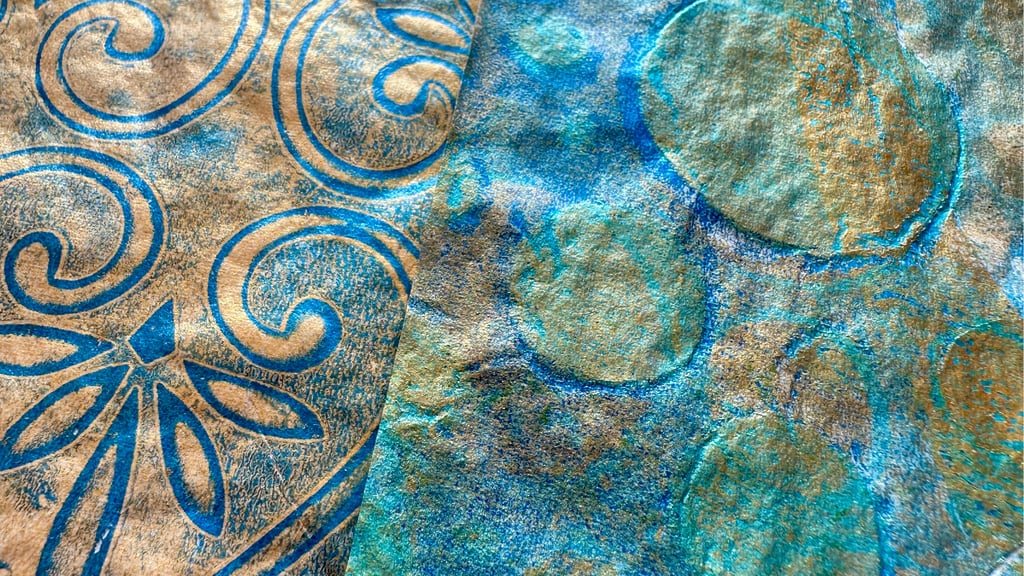
When creating collage or mixed media work, one of the biggest challenges can be choosing papers that work well together.
Color, pattern, and scale all affect how a piece comes together. When the papers feel cohesive, layering feels easier and the finished piece often feels more settled.
That is one reason curated collage paper sets can be helpful. You can see examples in my collage paper collection. Instead of pulling from a large pile of unrelated papers, you can begin with papers that already share a sense of color, pattern, and balance.
When the papers feel cohesive, layering tends to feel easier.
Key things that help collage papers work well together
When choosing collage papers, a few simple ideas can make the process easier:
• Use papers that share related or complementary colors
• Combine both bold and subtle patterns
• Mix larger shapes with smaller marks and details
• Include quieter papers that give the eye places to rest
• Start with a small group of papers that already feel connected
These small choices often help a collage feel more balanced and cohesive.
Why paper selection matters in collage
Collage papers do more than fill space. They help set the tone of a piece.
Some papers bring softness. Some bring contrast. Some create a quieter background, while others draw the eye right away. The way those papers work together affects the overall look of the piece.
When papers relate through color, whether in a similar family or through complementary contrast, and also vary in pattern and value, they tend to layer more naturally. This creates depth without feeling too busy. A good mix can make collage feel easier from the start.
Three things that help collage papers work beautifully together
1. Color
Color is often the first thing people notice.
Papers that share related colors can work well together, but complementary colors can be just as effective. A small amount of contrast can help a piece feel more balanced and interesting.
That does not mean everything needs to match exactly. Many collage pieces work best when a few papers relate in tone while another adds contrast.
A good group of papers might include:
one or two dominant colors
a lighter or quieter sheet
a darker sheet for contrast
a paper with a small amount of accent color
This kind of mix gives you options while still keeping the overall look cohesive.
2. Pattern
Pattern adds interest, but too many strong patterns competing at once can make a piece feel crowded.
A balanced group usually includes a mix of:
bold pattern
subtle pattern
quieter background-style papers
papers with layered marks or small areas of detail
This kind of mix gives the eye places to rest while still offering small details to notice. It also gives you more flexibility when tearing or cutting papers into smaller pieces.
If every paper is loud, the piece can feel hard to settle. If every paper is too quiet, it may lack interest. A thoughtful mix often works best.
Many of my own papers include quieter surfaces, translucent layers, or areas of simple color alongside more patterned sheets. That balance helps the stronger papers stand out while giving the composition room to breathe.

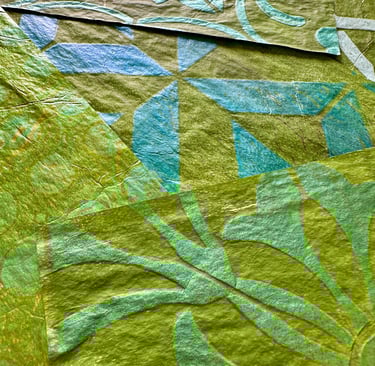
3. Scale
Scale is one of the most overlooked parts of collage paper selection.
Large shapes, open areas, and bigger marks can create breathing room. Smaller patterns and fine details bring contrast and help fill in around focal areas.
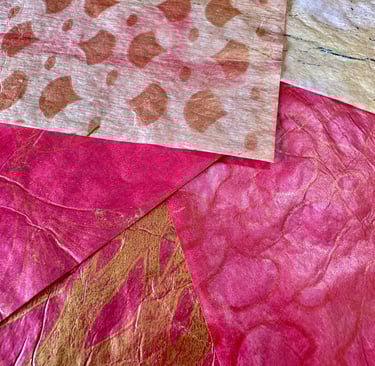
Combining larger pattern elements with smaller details often makes a composition feel more balanced. This matters even more once papers are torn into smaller pieces. A paper that feels bold as a full sheet can look very different once it is torn into smaller pieces.
That is why it helps to choose papers that offer variety in both pattern and scale from the start.
Why curated collage paper sets help
Curated collage paper sets can make the process easier.
When the colors and patterns have already been thoughtfully chosen to work together, it becomes easier to focus on composition and layering. You do not have to spend as much time sorting through papers or wondering what fits.
That does not mean every piece will look the same. It just means you are starting with papers that already feel connected.
This is especially helpful for:
collage artists who want cohesive options
people who enjoy art journaling
mixed media artists who like to layer papers with paint and mark-making
anyone who wants papers that already feel connected
A simple way to build a cohesive paper mix
If you are choosing your own collage papers, here is an easy starting point:
Pick:
1 paper with a stronger pattern
2 to 3 papers with softer or more open pattern
1 lighter paper
1 darker or richer paper
1 paper with an interesting detail, metallic accent, or layered mark
This gives you contrast, flexibility, and enough variation to keep the piece interesting.
You can also begin with a single color family such as blue, warm neutrals, pinks, or earthy tones. Once that feels settled, you can add one paper that brings a little contrast.
Hand-painted and digital collage papers
Both hand-painted and digital collage papers can work beautifully in collage.
Hand-painted papers often have layered marks, variation, and surface detail that feel rich and organic.
Digital collage papers give you flexibility. You can print them more than once, test different sizes, and use them in different kinds of projects.
Some people enjoy using both. A hand-painted set might become the starting point for a piece, while digital papers can give you extra options.
Where to find collage papers
If you enjoy working with papers that already feel cohesive, you can explore my current collage paper sets in the shop.
I offer hand-painted collage papers as well as digital downloads created from my original designs.
Studio Notes subscribers also receive a complimentary digital collage paper set to download.
Choosing collage papers does not need to feel complicated.
When you begin with a thoughtful mix of color, pattern, and scale, the process becomes easier and more enjoyable. Whether you build your own combinations or begin with a curated set, starting with papers that work beautifully together can make a real difference.
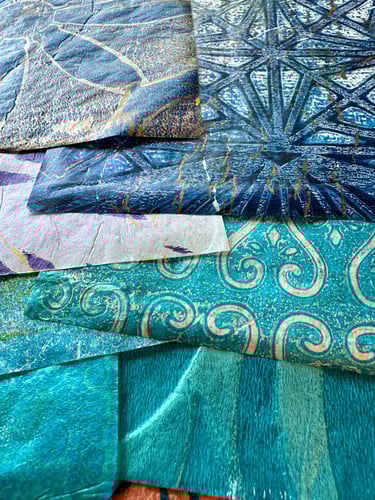
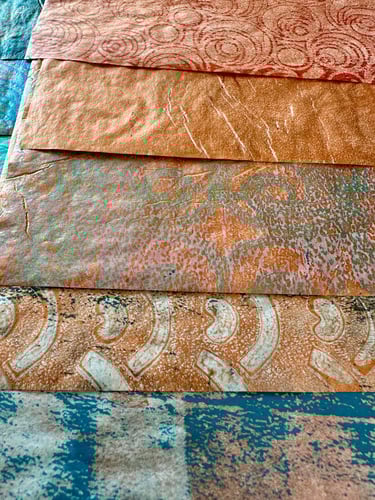
A mix of quieter and bolder pattern in related tones.
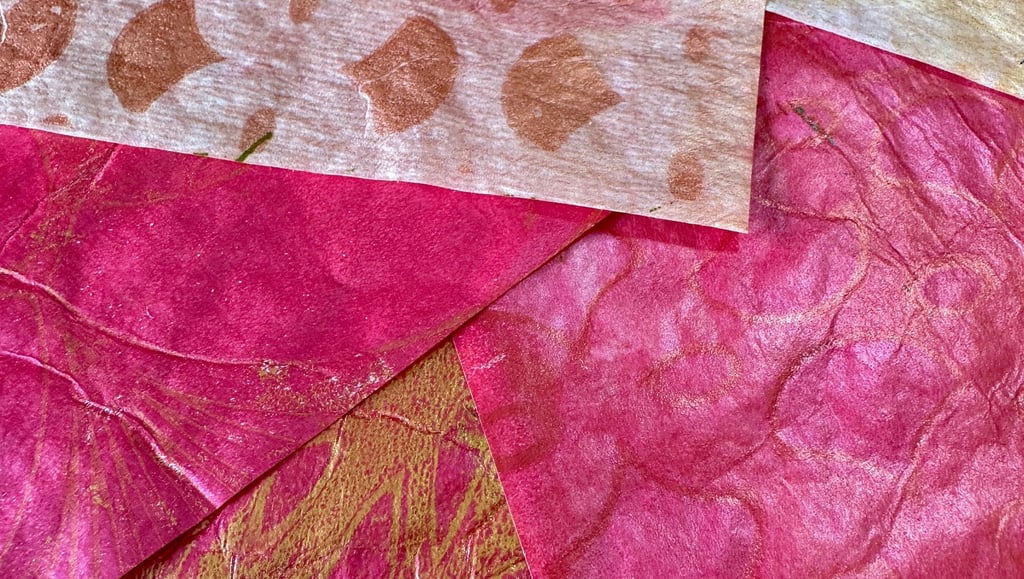
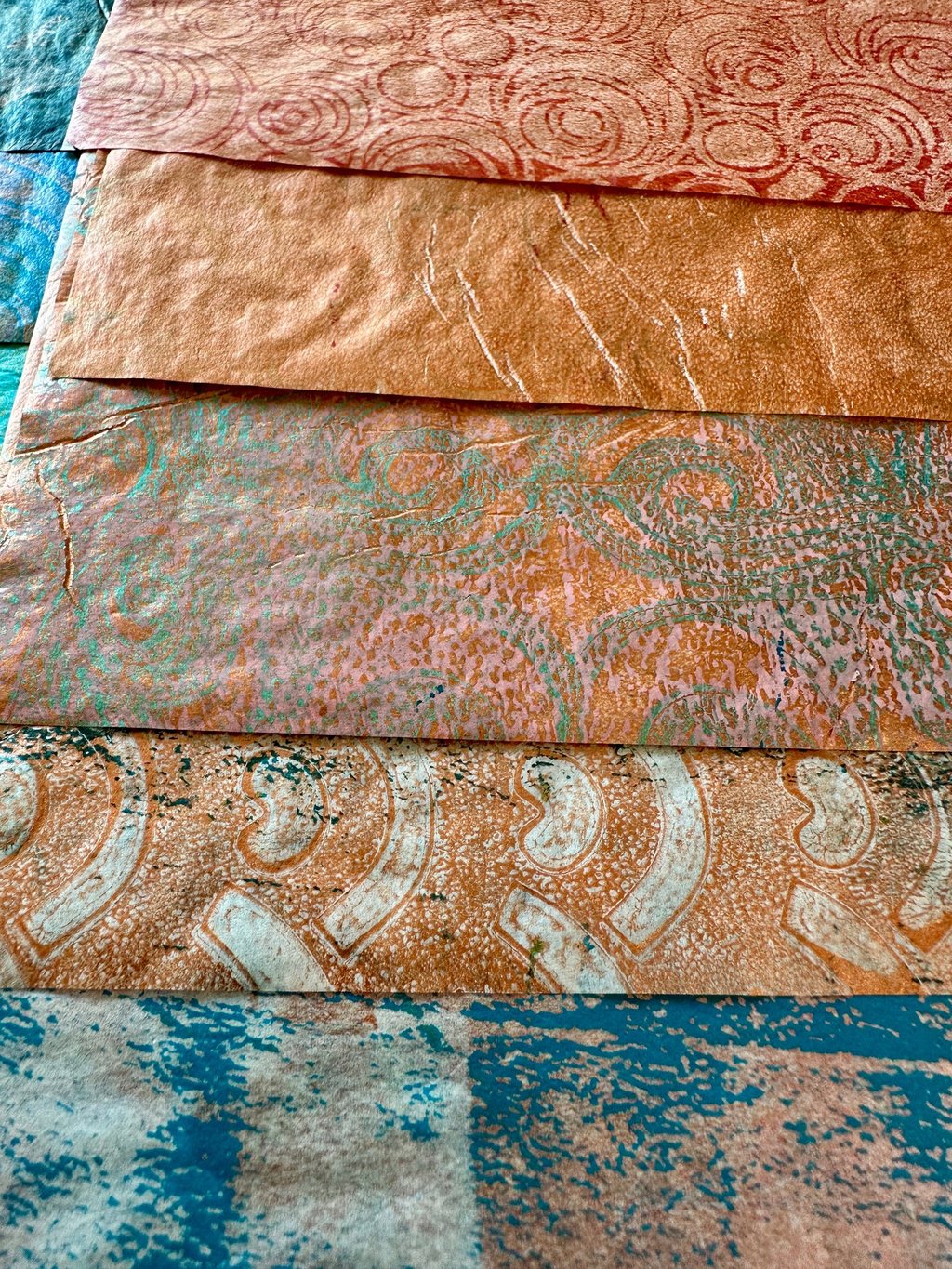
Warmer tones with a mix of lighter and deeper contrast.
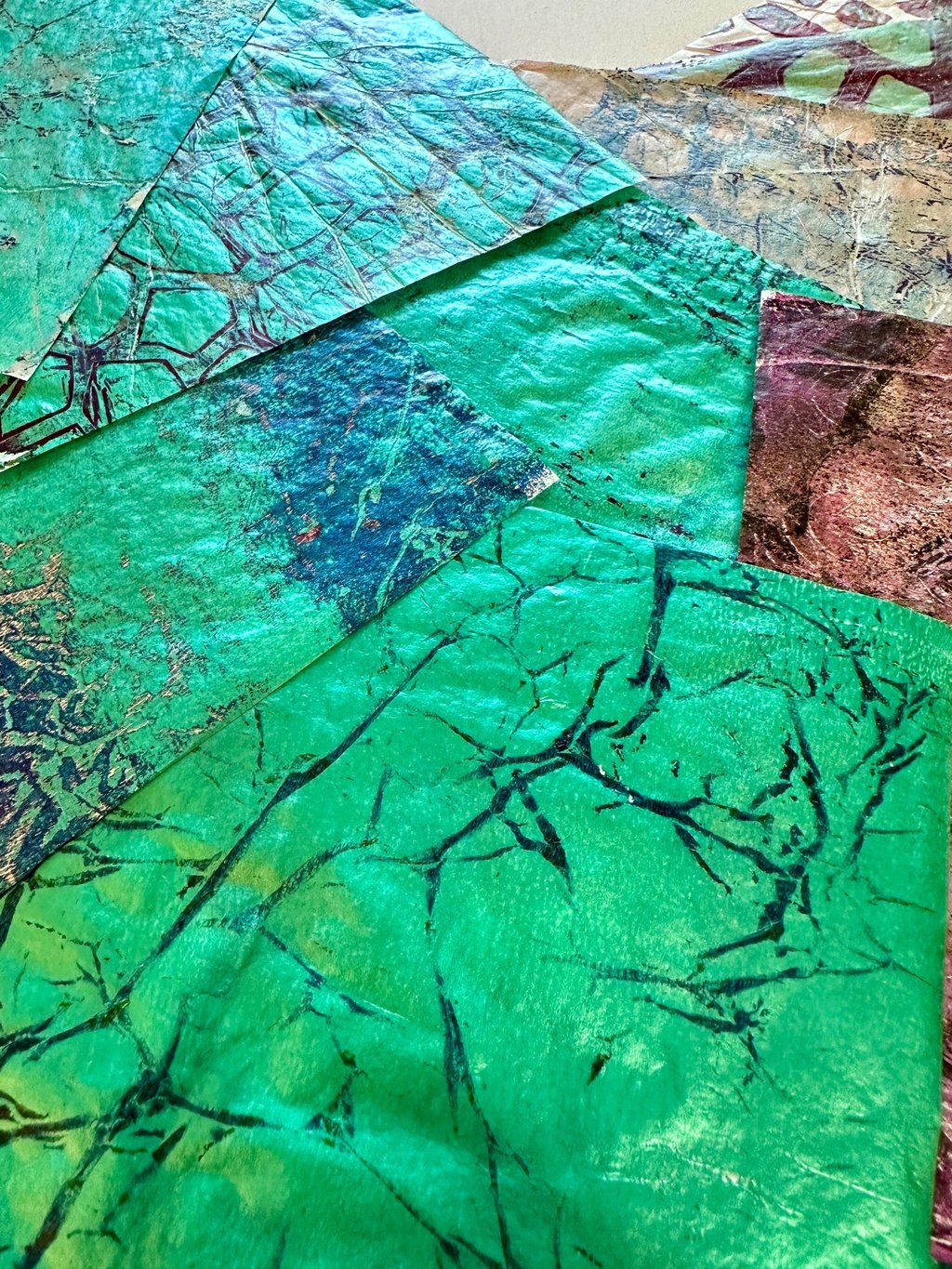
A mix of open space and more detailed surface in related tones.
Examples of collage paper combinations that work well
Here are a few examples of collage paper combinations that tend to work well together. You can also see more combinations and finished work in the studio gallery.
Example 1: Soft neutrals with gold detail
A lighter palette with layered marks and a small amount of metallic detail can feel calm, warm, and easy to build on.
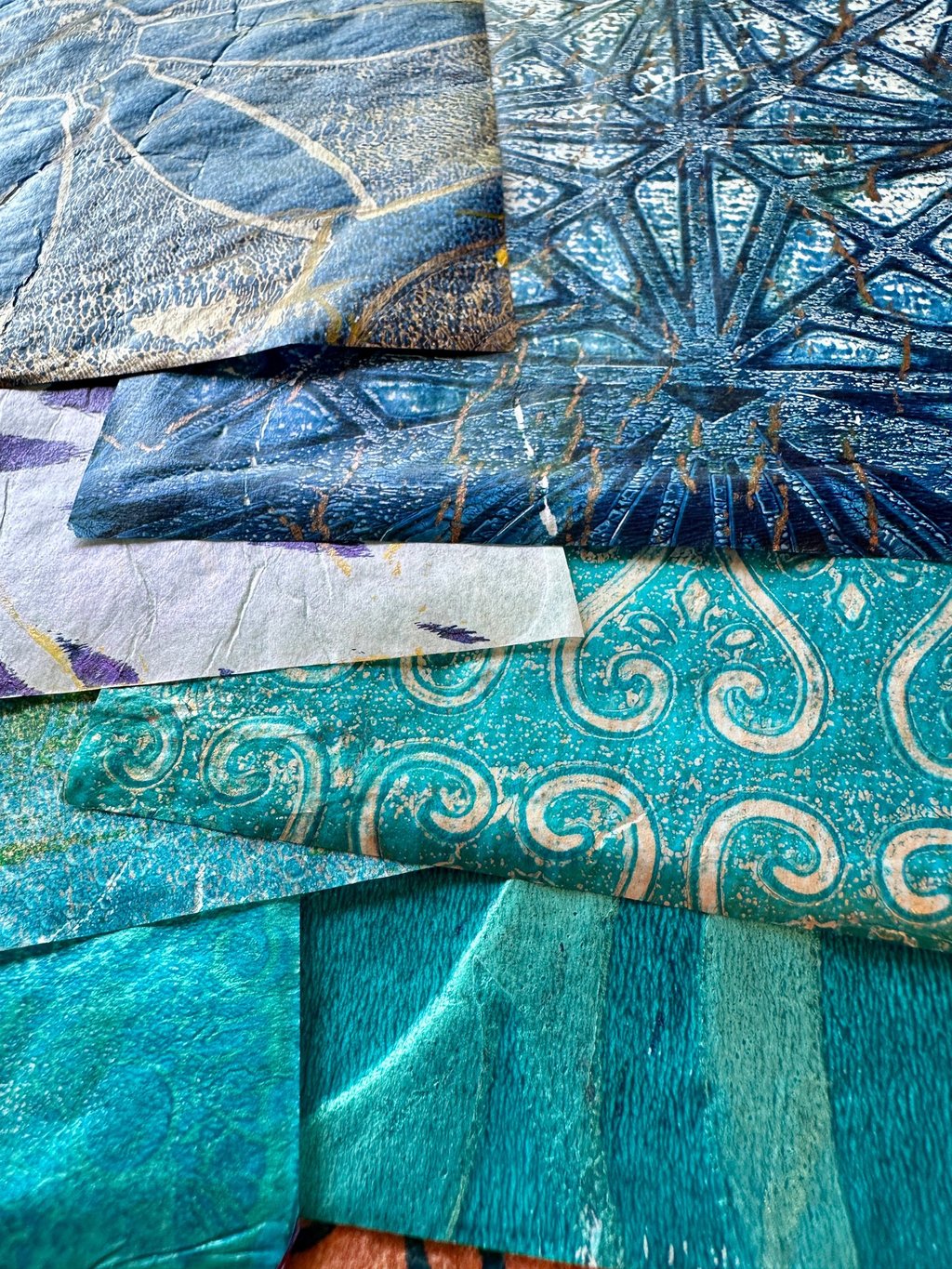
Example 2: Blue papers with varied pattern
When several shades of blue are paired with both quiet and more active patterns, the group can feel cohesive without feeling flat.
Example 3: Warm layered papers with one deeper accent
A warmer set can benefit from one darker or more textured paper that adds contrast and helps anchor the composition.
A small example
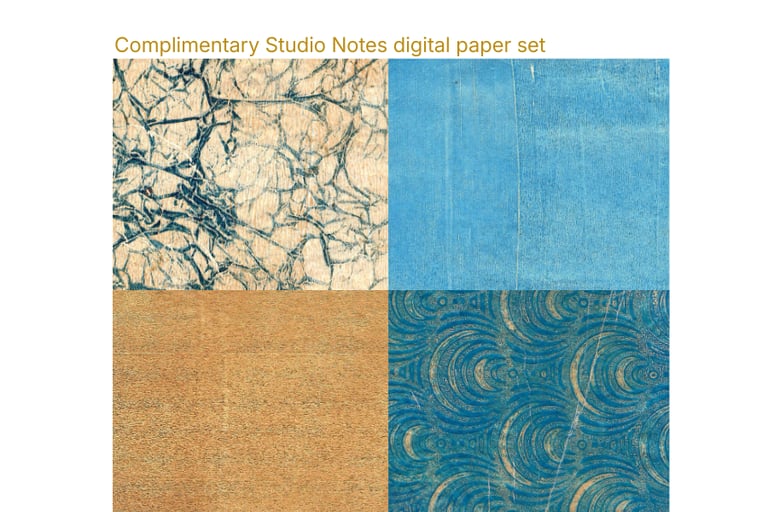
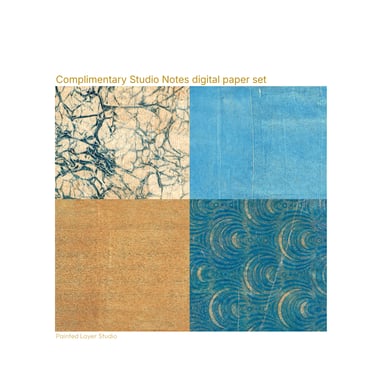
One simple example is the complimentary digital collage paper set I send to Studio Notes subscribers.
It includes four papers that work well together but still give some variety… one quieter warm neutral, one soft blue, one more detailed blue pattern, and one light paper with darker linear marks.
It is a nice example of how a small group of papers can feel connected without all looking the same.
If you'd like to receive that set, you can join Studio Notes here.
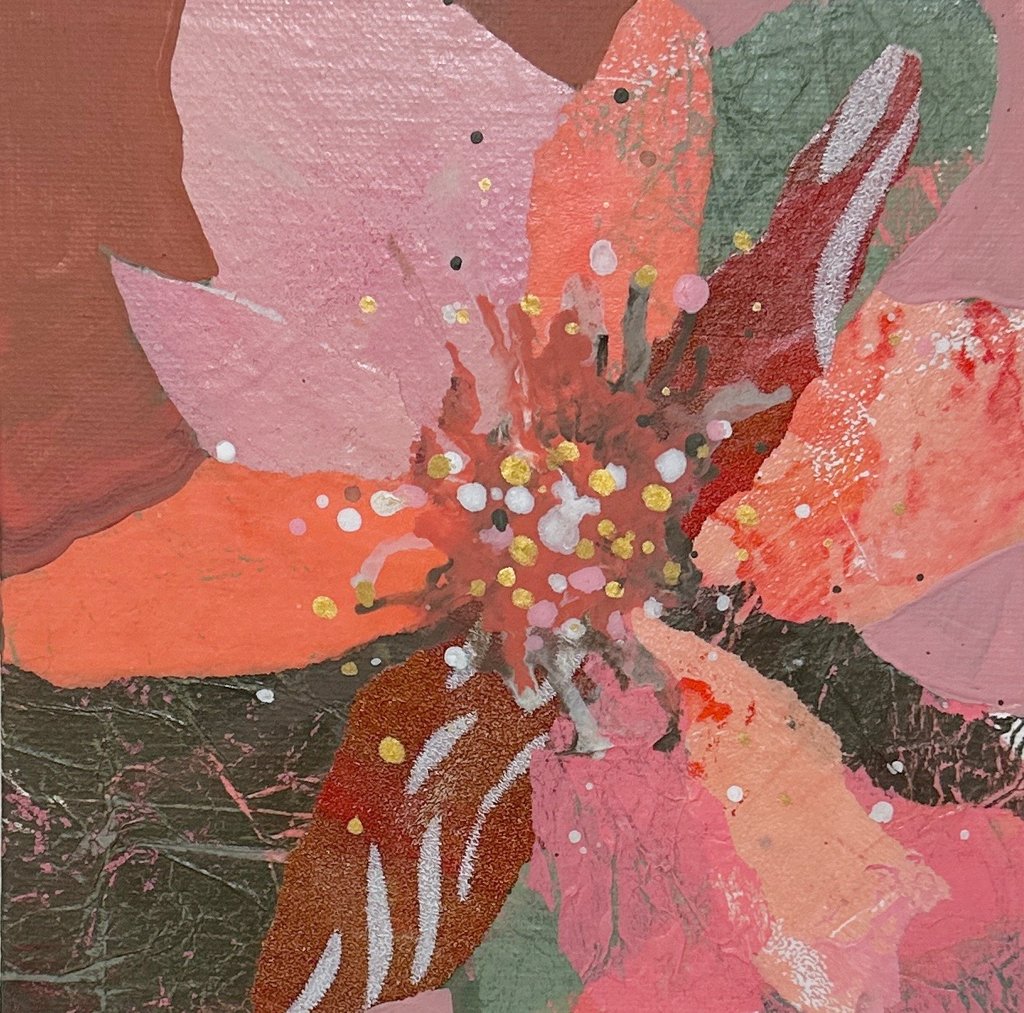
Larger shapes combined with smaller details help create balance in collage.
Frequently asked question
What papers work best for collage?
Papers that vary in color, pattern, and scale usually work well together. A balanced group often includes one stronger pattern, a few quieter papers, and one or two pieces that add contrast.
Painted Layer Studio
Printable papers, custom orders, and studio mail
Studio Notes
© 2026. All rights reserved.